A Guide to Human Experience Optimisation (HXO)

By Niamh Bevan
Visit profileDigital marketing optimisation has traditionally been approached through separate disciplines such as SEO, UX and CRO. While each plays an important role, treating them in isolation can lead to fragmented strategies that prioritise individual metrics over the overall user experience.
At the same time, the way people discover and interact with content is changing. With the rise of AI-generated results and evolving search behaviour, traditional performance signals are becoming less reliable, placing greater emphasis on trust, experience and genuine value.
This shift calls for a more connected approach. Human Experience Optimisation (HXO) brings these disciplines together, focusing on delivering a consistent, meaningful and user-centred experience across the entire journey.
What is HXO?
Human Experience Optimisation (HXO) refers to optimising websites in relation to how people search, engage, and make decisions online.
User expectations have been evolving since the Google helpful content update, with trust, usefulness, and value always important but now amplified by the rise of AI-generated content. As a result, search engines take a broader view, assessing how consistently a brand demonstrates credibility and value over time.
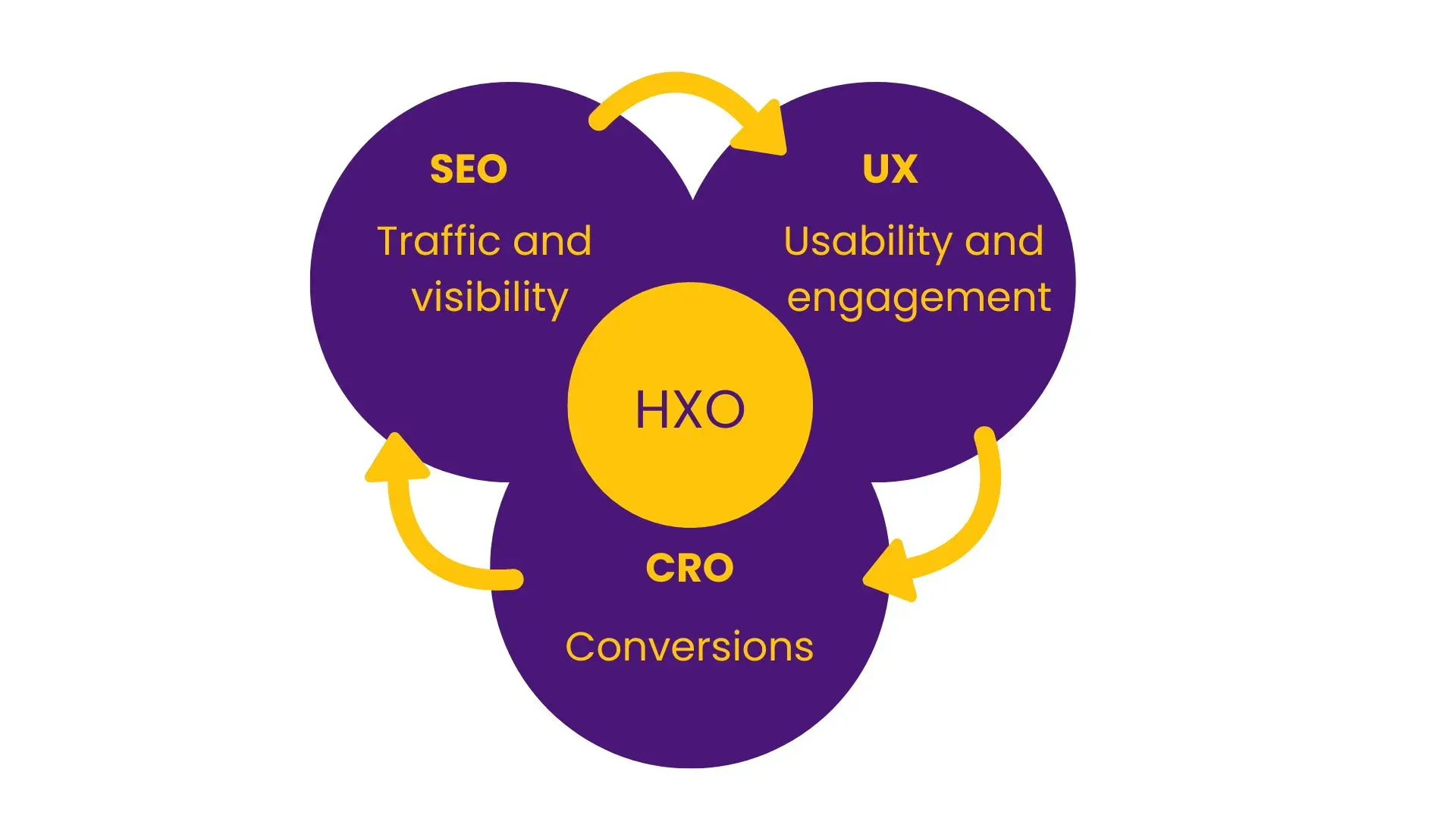
Rather than looking at optimisation as siloed processes, HXO recognises the intersections between these key disciplines:
- SEO = helps users discover relevant content through search
- UX = shapes how users experience and interact with that content
- CRO = supports users in taking meaningful actions
These combined elements create a unified approach to digital optimisation that prioritises the overall quality of the user experience throughout each stage of their journey.
The Convergence of SEO, UX and CRO
Traditionally SEO, UX and CRO have been treated as completely separate disciplines. However, that’s not how users experience a website, as they are moving through a continuous journey.
Finding content is only the first step as without meaningful engagement, it has little value. Engagement without understanding how to make an action becomes ineffective, and without trust, conversions can dwindle.
When these areas are managed in isolation, their impact is often limited. Real performance comes from understanding how they connect and influence each other, and that’s where HXO comes in.
HXO brings these elements together to create a seamless, valuable user experience. It shifts the focus from just optimising just for search engines to understanding your audience and improving the full website experience, not just individual pages or keywords.
This means identifying user needs and pain points, building trust, improving clarity and consistency, and removing friction throughout the journey.
While traditional metrics still matter, HXO success is measured more broadly through engagement, repeat visits, and growing brand recognition.
The Rise of AI Generated Content
With the increasing availability and use of generative tools like ChatGPT, businesses can now produce content at scale. A report by Forbes suggests that 90% of online content could be AI-generated by 2026, bringing two key challenges:
The first is content saturation. As more businesses publish at scale, the web becomes flooded with similar content targeting the same topics.
The second is the loss of human perspective. AI-generated content often prioritises visibility but lacks real insight, unique viewpoints, and lived experience. This can make content feel repetitive, impersonal, and sometimes inaccurate.
This is why Human Experience Optimisation matters more than ever. In a landscape full of generic AI content, brands that focus on real user value, human insight, and expertise are far more likely to stand out.
EEAT and People First Content
Search engines continuously emphasise the importance of credibility and trust, especially Google through their helpful content updates and E-E-A-T guidelines. At its core E-E-A-T defines what a high-quality, user-focused experience should look this is increasingly important with the rise of generative AI content in the current digital landscape.
So what is E-E-A-T?
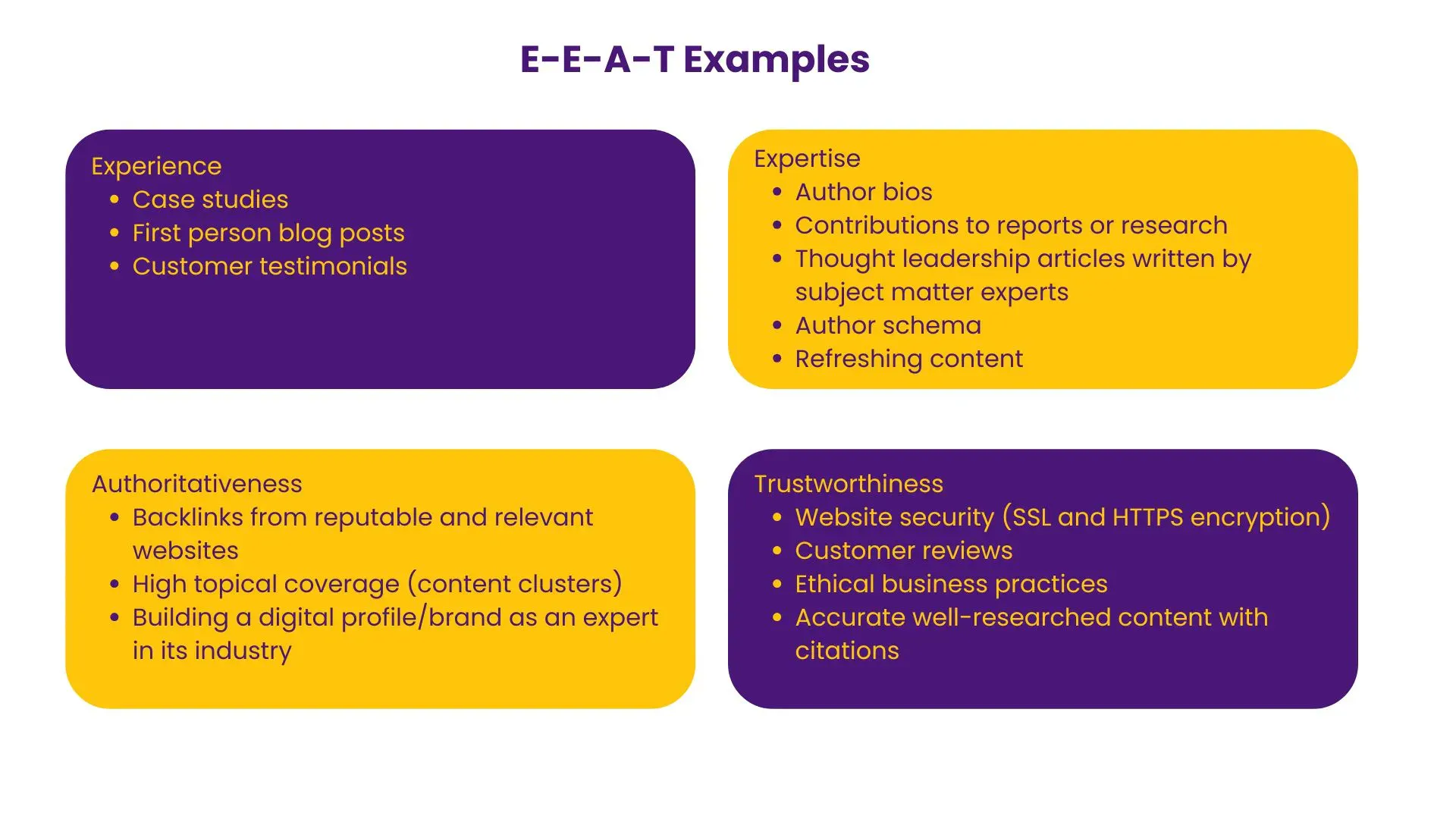
E-E-A-T stands for Experience, Expertise, Authoritativeness and Trustworthiness, and it is a key component of Google’s Search Quality Rater Guidelines to ensure users receive reliable and high-quality search results. Each element of the framework can be demonstrated in various ways such as:
Experience
You can demonstrate experience by ensuring that your content has been written by someone with real-world experience and knowledge on the topic.
This impacts HXO as it builds relatability and authenticity as users trust content that feels lived and not generated. When content feels authentic, users will stay longer and engage more with your content showing the experience is genuinely valuable.
This can be measured by:
- Time on page/dwell time - users engage longer with real insights
- Scroll depth - users consume more of the content
- Engagement rate vs bounce rate
- Return visits - users come back for more trusted content
Expertise
Expertise can be demonstrated on a topic through depth and accuracy of subject knowledge. This can be done through well-structured guides that answer specific questions, content written by subject experts with the use of examples and data.
This connects to HXO as when content is clear, relevant and easy to understand users find what they need faster, are engaged with the content, and are less likely to leave in search for better answers.
The link between expertise and metrics can feel less obvious than other aspects, however you can link it to how efficiently and confidently users get answers.
- CTR - users recognise your content as relevant
- Organic visibility for long-tail queries - shows your content closely matches user intent
- On-page engagement (time on page, scroll depth) - users are staying to consume and understand the content
Authoritativeness
Publishing high-quality content that demonstrates your expertise and experience in your field will in turn help to boost your authority through third-party backlinks, identifying your content as a useful and authoritative source. Growing your authority and reputation within your industry impacts not just your SEO but HXO too as authority builds confidence in your brand making users more likely to engage and trust your website. This can be measured by:
- Backlink quality and quantity
- Branded term performance
- Referral traffic from authoritative sources
Trustworthiness
Trust can be built by being transparent, reliable and accurate with the content and messages you publish. This connects with HXO as trust removes user hesitation as users are more willing to convert and return to your website if they feel safe to take action on it. This can be measured by:
- Customer reviews and testimonials
- Conversion rate (form fills, purchases, sign-ups)
- Form completion rate
- Cart abandonment rate (for e-commerce)
E-E-A-T and HXO
The E-E-A-T framework reflects how both users and search engines evaluate whether content provides genuine value. However, providing these signals isn’t as simple as adding author bios or citations. It requires a consistent demonstration of knowledge, transparency and high-quality content over time.
When businesses optimise their website for people through helpful content that addresses a user's needs, includes real-world experience and consistently aligns with your brand's values and voice it reinforces the signals that contribute to credibility and authority.
This is why HXO connects with the long-term development of E-E-A-T signals by focusing on broader and consistent user experiences that genuinely help users rather than individual elements that are purely added for search engines.
For example, instead of creating a keyword-focused page listing features, an HXO approach would provide real-world examples, expert guidance, and clear pathways to action. This helps users not just find information, but creates an aligned experience that answers, reassures, and guides the user to their next step.
The Future of Optimisation: Designing for Humans First
Search engines and users increasingly reward digital experiences that demonstrate real value through helpfulness, credibility, and usability.
This shift reinforces what we’ve explored, which is that success no longer comes from optimising in isolation. It comes from combining SEO, UX and CRO principles alongside human-centred signals such as the E-E-A-T framework to create an aligned experience that genuinely meets user needs.
In a landscape shaped by AI-generated content and rising expectations, the brands that stand out are those that go beyond visibility, focusing on trust, clarity and delivering real human value at every stage of the journey.
The opportunity now is to think more holistically by understanding your audience, connecting your efforts, and optimising for the full experience not just individual touchpoints.
Because when every part of the journey works together, better experiences don’t just follow, they drive better results.